

Panerai News
Real vs Replica Panerai — What Collectors Actually Notice
Mar
Real vs Replica Panerai — What Collectors Actually Notice
Panerai replica vs original — it’s the question that follows every wrist shot posted online. Someone spots a Luminor at a dinner party and wonders: is that the real thing? After three decades of handling both genuine and superclone Panerai watches side by side, I can tell you exactly where the differences hide — and where they’ve practically vanished.
In This Guide:
- Panerai Replica vs Original — The Honest Truth in 2026
- Crown Guard — The First Thing Experts Check
- Dial Printing and Sandwich Construction
- Case Dimensions and Weight — The Numbers Game
- Movement — Where Real Differences Live
- Materials — Steel, Ceramic, and Bronze Compared
- The “Arm’s Length Test” — What’s Actually Visible on Wrist
- What a Watchmaker Would Notice
- Model-Specific Comparisons
Panerai Replica vs Original — The Honest Truth in 2026
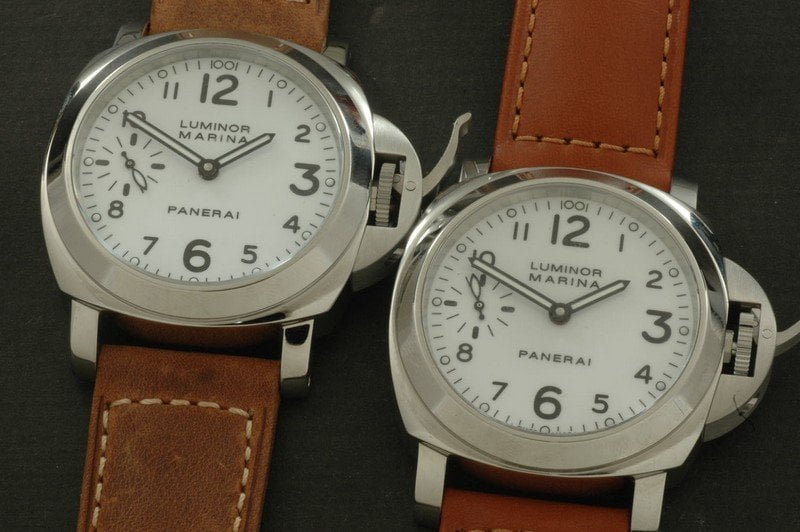
Five years ago, telling a superclone from a genuine Panerai took about three seconds. Today it takes a loupe, good lighting, and specific knowledge of what to check. The factories producing Swiss clone Panerai timepieces have closed the gap on dimensions, weight, and finishing to a degree that surprises even seasoned collectors.
That said, differences exist. Some matter on wrist. Most don’t. This guide walks through every checkpoint — from crown guard construction to movement decoration — so you know exactly what separates a genuine Panerai from its superclone counterpart.
Crown Guard — The First Thing Experts Check
The Luminor crown guard bridge is Panerai’s signature. It’s also the first detail that reveals build quality in any timepiece claiming to be a Panerai.
| Detail | Genuine Panerai | Superclone | Noticeable? |
|---|---|---|---|
| Lever tension | Firm, precise snap | Firm snap, slightly lighter spring | Only if you’ve handled genuine |
| Gap when closed | Zero visible gap | 0.1-0.2mm on some models | Needs close inspection |
| Edge finishing | Mirror-polished edges, brushed flats | Good polish, occasionally softer edges | Under magnification only |
| Crown seal | Screw-down, rated to 100-300m | Screw-down, functional but untested | Not visible |
On the Luminor collection, the crown guard is machined from the same steel billet as the case on genuine watches. Top-tier superclones replicate this one-piece construction. Lower grades weld or glue the guard — and that’s visible to anyone who looks at the junction between guard and case.
Tip: Look at the crown guard from the side. On a genuine Panerai, the transition from case to guard is seamless — one continuous surface. On lesser copies, you’ll see a faint line where two pieces meet.
Dial Printing and Sandwich Construction
Panerai’s sandwich dial is a two-layer system. The top plate has hour markers cut out like windows. Behind it sits a second plate coated with luminous material. Light shines through the cutouts, creating the distinctive Panerai glow.
This is where genuine vs superclone differences become interesting:
Text Quality
On an authentic Panerai, the “LUMINOR MARINA” text is laser-etched with edges sharp enough to feel under a fingernail. The lettering is thin, consistent, and perfectly spaced. Superclones from top factories match this closely, but under 10x magnification, the letter edges sometimes show microscopic roughness — a difference invisible at wrist distance.
Lume Performance
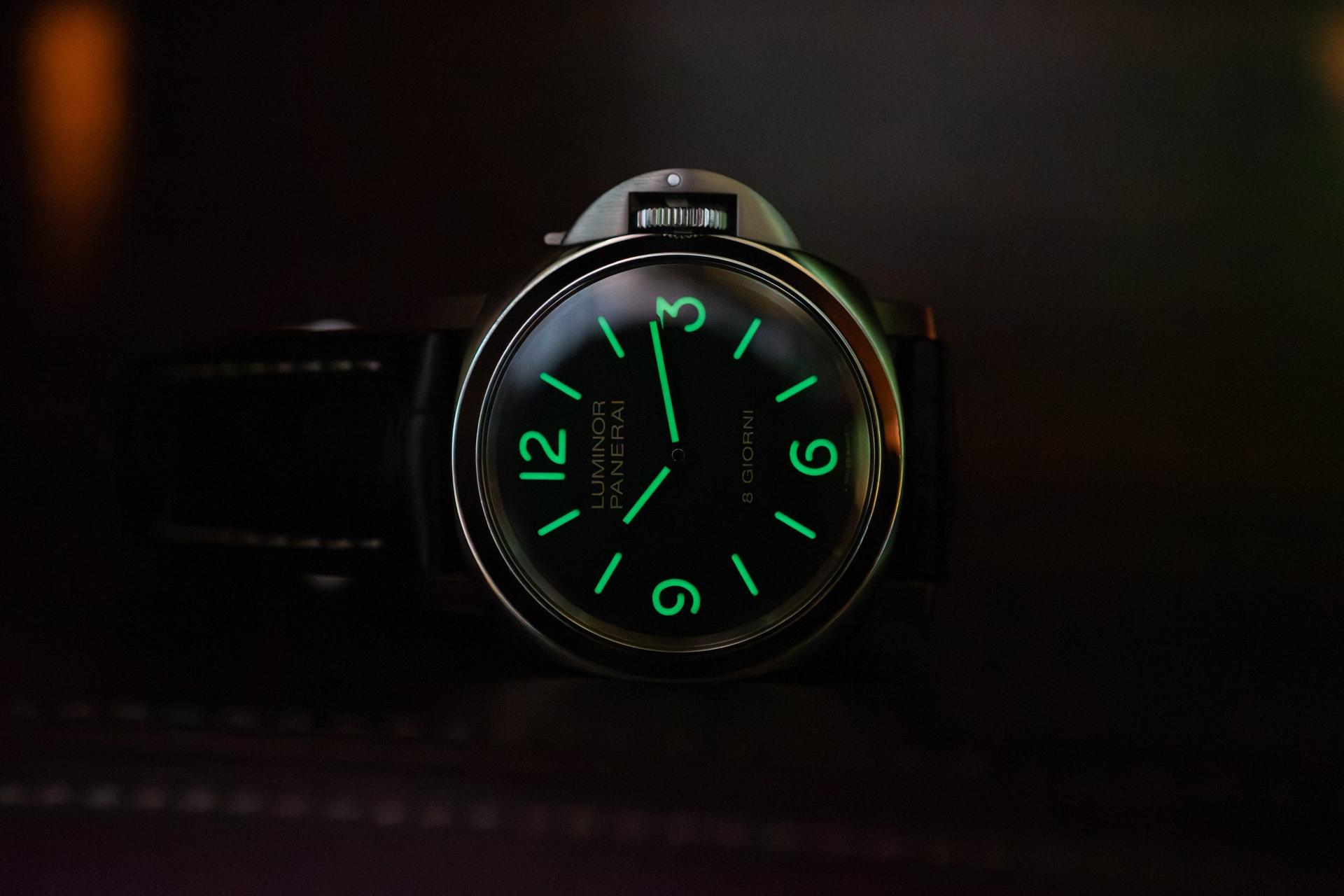
Genuine Panerai uses proprietary luminous compound that charges fast and glows blue-green for 8+ hours. The best superclones use Swiss Super-LumiNova that performs within 90% of genuine — same color, slightly shorter duration. Cheap copies glow yellow or fade within an hour.
Dial Depth
Hold a Panerai at an angle and look through the cutout markers. On a genuine watch, you see clear depth — the luminous layer sits visibly behind the top plate. A quality superclone replicates this depth. Single-layer printed dials are the mark of a budget imitation and the easiest tell at any distance.
Case Dimensions and Weight — The Numbers Game
This is where superclones have made the biggest leap. Modern 1:1 Panerai watches match genuine dimensions within fractions of a millimeter.
| Measurement | Genuine PAM1312 | Superclone PAM1312 | Difference |
|---|---|---|---|
| Diameter | 44.0mm | 44.0-44.2mm | 0-0.2mm |
| Thickness | 15.6mm | 15.5-15.8mm | 0.1-0.2mm |
| Lug-to-lug | 52.5mm | 52.3-52.6mm | 0.1-0.2mm |
| Weight (on strap) | ~155g | ~150-155g | 0-5g |
| Lug width | 24mm | 24mm | Exact match |
A 0.2mm dimensional difference is undetectable on wrist. The weight variance of 3-5 grams disappears the moment you strap it on — your brain can’t distinguish that margin through skin. This is why the PAM1312 superclone feels identical to genuine during normal wear.
Insight: Weight is the metric that matters most for on-wrist feel. Top superclone factories now match genuine weight within 3 grams by using the correct 316L steel thickness and Swiss clone movements with comparable mass. Five years ago, the gap was 15-20 grams — immediately noticeable.
Movement — Where Real Differences Live
Open the caseback, and you’re looking at the most honest comparison point. This is where genuine Panerai and its superclone counterpart diverge most clearly.
Genuine Panerai P.9010
In-house caliber. 31 jewels. COSC-grade accuracy (±4 sec/day). Twin barrels delivering 72-hour power reserve. Decorated with circular Geneva stripes, beveled bridges, and blued screws. Every surface finished by hand — a process that adds hours of labor per movement.
Swiss Clone P.9010
Architecturally identical layout. 72-hour power reserve — confirmed. Accuracy within ±5-8 sec/day. The decoration is present — Geneva stripes, signed rotor, blued screws — but under magnification, the stripe depth and consistency fall slightly short of genuine. The functional difference for daily wear? Negligible. The visual difference through a caseback? Subtle.
| Aspect | Genuine P.9010 | Swiss Clone P.9010 | Visible? |
|---|---|---|---|
| Power reserve | 72 hours | 72 hours | No difference |
| Accuracy | ±4 sec/day | ±5-8 sec/day | Only with timing machine |
| Rotor spin | Smooth, weighted | Smooth, slightly lighter feel | Barely perceptible |
| Geneva stripes | Deep, uniform, mirror-like | Present, slightly less depth | Under loupe only |
| Blued screws | Heat-blued, deep color | Chemical blue, good color | Under magnification |
| Swan neck regulator | Present on some calibers | Not always replicated | Yes, through caseback |
Materials — Steel, Ceramic, and Bronze Compared
316L vs 904L Steel
Genuine Panerai uses AISI 316L stainless steel — the same grade used in top superclones. Unlike Rolex (which uses 904L), Panerai has always stayed with 316L, which means the steel composition in a superclone is genuinely identical to authentic. Same corrosion resistance, same weight, same finishing potential.
Ceramic (Ceramica)
Both genuine and superclone use zirconium oxide ceramic. The PAM441 Ceramica superclone achieves the same matte black finish and scratch resistance. The difference lies in firing temperature precision — genuine Panerai controls this to tighter tolerances, but the end result on wrist is visually identical.
Bronzo
CuSn8 bronze alloy in both genuine and superclone versions. The PAM968 superclone develops real patina because the alloy is chemically the same. This is one material where the aging process erases any initial differences within weeks of wear.
The “Arm’s Length Test” — What’s Actually Visible on Wrist
Every comparison above examines details under magnification or with the caseback open. Here’s what a person across a dinner table actually sees when they look at a Panerai on your wrist:
| What They See | Genuine | Superclone | Distinguishable? |
|---|---|---|---|
| Overall shape and size | Correct | Correct | No |
| Crown guard profile | Correct | Correct | No |
| Dial color and texture | Correct | Correct | No |
| Lume glow in dim light | Strong blue-green | Strong blue-green | No |
| Strap/rubber quality | Premium | Good to premium | Rarely |
| Wrist presence and weight | Substantial | Substantial | No |
At arm’s length — which is how 99% of people encounter your watch — a top-tier superclone and genuine Panerai are visually identical. The differences require tools, time, and specific expertise to detect.
What a Watchmaker Would Notice
If a trained watchmaker opens the caseback with tools, here’s what they’d flag on a superclone:
Serial number format. Genuine Panerai stamps unique serials on the caseback and movement. Superclones use plausible formats but the numbers won’t match Panerai’s database. No watchmaker checks this casually, but an authorized service center would.
Movement finishing under 20x. The Geneva striping depth and bridge beveling on genuine Panerai movements show hand-finishing marks. Swiss clones use machine finishing that’s uniform but lacks the subtle irregularities of hand work. This requires a trained eye and magnification.
Gasket quality. Genuine Panerai uses proprietary gaskets tested to rated depth. Superclones use standard gaskets — functional for daily wear and rain, but not tested to 100m+ under pressure.
Model-Specific Comparisons
PAM1312 Luminor Marina — Genuine vs Superclone
The PAM1312 is the most replicated current Panerai. Superclone versions nail the 44mm case proportions, black sandwich dial, and P.9010 clone movement. The one detail that varies: the depth of the “OP” engraving on the crown — genuine is slightly deeper with sharper edges.
PAM441 Ceramica GMT — Genuine vs Superclone
The PAM441 ceramic case matches genuine in hardness and matte finish. The GMT hand jumps correctly on the superclone P.9001. The tell: genuine has a slightly more uniform ceramic grain under magnification — invisible on wrist.
PAM382 Submersible Bronzo — Genuine vs Superclone
The PAM382 is fascinating because the bronze patina development makes every watch unique within weeks. A genuine and superclone sitting side by side for a month would develop different patina patterns — making them equally unique and equally impossible to compare.
Frequently Asked Questions
Can you tell the difference between a real and superclone Panerai on wrist?
At normal viewing distance, no. The dimensional accuracy of current superclones (within 0.2mm) and weight matching (within 3-5 grams) make on-wrist distinction essentially impossible without tools. The differences that exist — movement finishing, serial validation, gasket ratings — require the caseback to be opened.
How close is a Panerai superclone to the original?
Current top-tier superclones match approximately 95-97% of the genuine article. The remaining 3-5% lives in movement finishing precision, gasket certification, and serial number authenticity. For daily wearing experience — visual appearance, weight, tactile feel, timekeeping — the gap is functionally zero.
Do Panerai superclones use the same steel as genuine?
Yes. Genuine Panerai uses 316L stainless steel — the same grade used in quality superclones. Unlike some brands that use proprietary alloys (Rolex 904L, Omega sedna gold), Panerai’s steel choice is standard surgical-grade, making material matching straightforward for superclone manufacturers.
Can a watchmaker tell if a Panerai is a superclone?
An experienced watchmaker with the caseback open — yes, most likely. They’d check movement finishing under magnification, serial number formatting, and gasket specifications. Without opening the caseback, even professionals struggle to distinguish a top-tier superclone from genuine based on external inspection alone.
Does a Panerai superclone pass the “lume test”?
Quality superclones use Swiss Super-LumiNova that glows the correct blue-green color and lasts 6-8 hours. Genuine Panerai lume may last slightly longer (8-10 hours) with marginally brighter initial charge. In a dark room, both glow convincingly — the difference shows only after 6+ hours when the superclone fades faster.
Is the weight of a superclone Panerai the same as genuine?
Within 3-5 grams on top-tier versions. A genuine Luminor 44mm on leather weighs approximately 155 grams. The best superclones hit 150-155 grams. This margin is imperceptible during wear — your wrist cannot detect a 3-gram difference.
How good are Panerai superclones compared to five years ago?
Dramatically better. In 2020, superclones had 10-15 gram weight gaps, visible dial printing issues, and movements that drifted 15+ seconds daily. Today’s versions close the weight gap to 3 grams, match dial printing quality under normal viewing, and keep time within 5-8 seconds per day. The improvement comes from better CNC machining, Swiss clone caliber development, and competition between factories driving quality upward.