

Panerai News
Panerai Radiomir Replica — Black Seal, California Dial and Heritage Models
Mar
Panerai Radiomir Replica — Black Seal, California Dial and Heritage Models
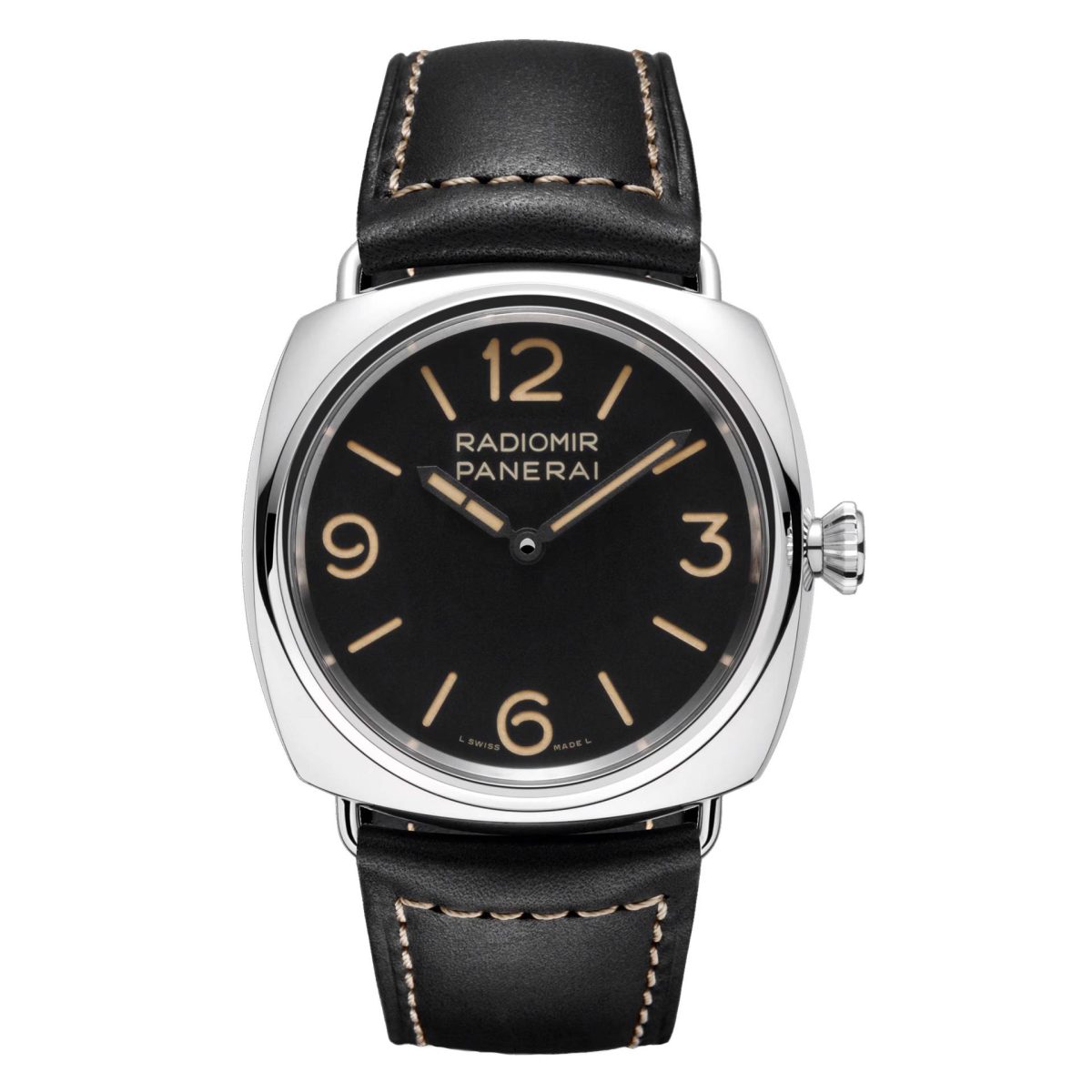
Every Panerai started here. Before the Luminor existed, before the crown guard became an icon, there was the Radiomir — a cushion-shaped tool watch designed in 1936 for Italian Navy frogmen who needed to read the time twenty meters underwater in pitch darkness. That original purpose still bleeds through every modern Radiomir design: wire-loop lugs, an exposed crown, and a dial so clean you could read it with one eye closed in bad light.
The Radiomir sits in a strange place among Panerai replicas. Collectors who know the history consider it the purest expression of the brand. Newcomers often walk right past it because it lacks the crown guard drama of the Luminor. That is a mistake.
In This Guide:
- Why the Radiomir Has No Crown Guard
- Radiomir vs Luminor — Five Key Differences
- Black Seal — The Military Heritage Line
- California Dial — The Collector Favorite
- Radiomir 1940 — The Bridge Between Eras
- Skeleton and Tourbillon — Open-Worked Radiomir
- Firenze — The Florence Connection
- Best Radiomir Replica Models — Summary Table
- Hand-Wound vs Automatic — Why Radiomir Stays Manual
- Radiomir Sizing — 42mm, 45mm, 47mm
Why the Radiomir Has No Crown Guard
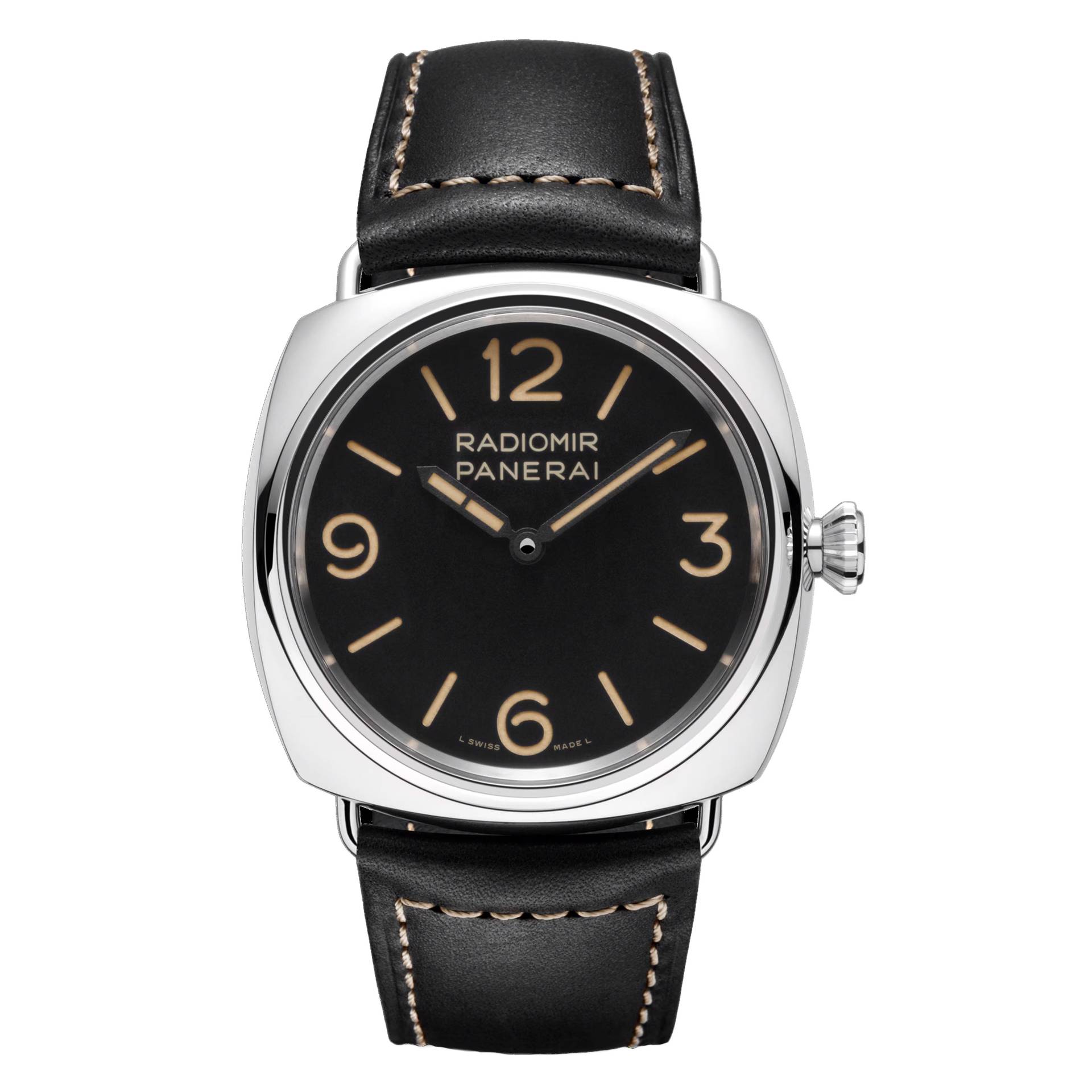
This is the question that comes up every single time. The Luminor’s lever-lock crown guard arrived in the 1950s as a sealing improvement. The Radiomir predates it by almost two decades. Its crown sits exposed on the right side, protected only by its own screw-down mechanism.
The wire-loop lugs are soldered to the case — thin bent steel wire that curves around the spring bars. This construction is faithful to the 1936 prototype where Italian military watchmakers literally bent wire by hand to create attachment points for the strap. On modern Radiomirs, the wire lugs are decorative — the actual structure is solid steel underneath — but the visual effect is unmistakable.
History: The name “Radiomir” comes from the radium-based luminous paste Panerai patented in 1916. The original compound was dangerously radioactive — modern versions use Super-LumiNova instead, but the name stuck.
Radiomir vs Luminor — Five Key Differences
| Feature | Radiomir | Luminor |
|---|---|---|
| Crown protection | Exposed screw-down crown | Lever-lock crown guard bridge |
| Lugs | Wire-loop (soldered) | Integrated machined lugs |
| Case shape | Cushion (rounded square) | Tonneau with flat sides |
| Typical movement | Hand-wound (P.999, P.3000) | Automatic (P.9000, P.9010) |
| Heritage feel | 1930s military minimalism | 1950s-era tool watch |
Black Seal — The Military Heritage Line
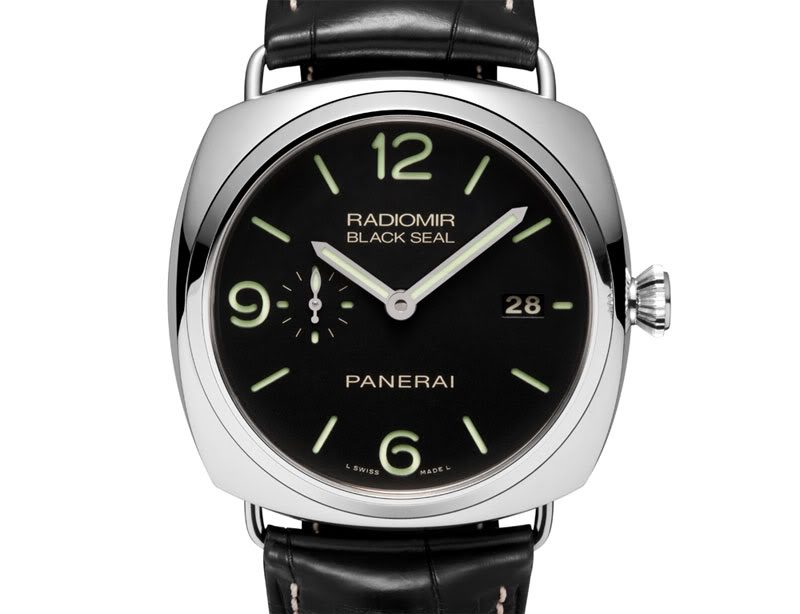
The Radiomir Black Seal traces its name to the Italian Navy’s Decima MAS unit — the “Black Seals” who used these watches during underwater sabotage missions in World War II. The modern Black Seal models keep that military DNA: matte black dial, minimal markings, strong lume, and no unnecessary complications.
Key Black Seal PAM references for replicas:
- PAM183 — 45mm, Black Seal, small seconds at 9, hand-wound
- PAM287 — 45mm, Black Seal Ceramica, DLC-coated steel
- PAM292 — 45mm, Black Seal Logo, screw-down caseback with seahorse emblem
- PAM505 — 45mm, Black Seal 8 Days, P.2002 movement, 8-day power reserve
California Dial — The Collector Favorite
A California dial splits the hours between two numeral styles: Roman numerals on the top half (XII, I, II, III) and Arabic numerals on the bottom half (7, 8, 9, 10, 11, 6). The origin story is debated — some credit a California-based dial refinisher in the 1940s, others say Panerai designed it for maximum underwater readability by combining two high-contrast number formats.
Whatever the truth, the California dial has become the most sought-after Radiomir variant among collectors. The PAM424 and PAM604 in particular command attention because the dual-format layout gives the watch a visual complexity that most Panerais deliberately avoid.
Collector tip: If you want one Radiomir replica that starts conversations, get a California dial. It is the single most recognizable Panerai dial layout outside the brand’s own sandwich design.
Radiomir 1940 — The Bridge Between Eras
The Radiomir 1940 sits chronologically between the original Radiomir and the Luminor. It keeps the cushion case and exposed crown but updates the lugs — instead of wire loops, the 1940 has solid machined lugs that preview the Luminor’s more modern attachment style. The result looks like a Radiomir wearing a slightly sharper suit.
The 1940 case is available in 42mm, 45mm, and 47mm. For wrists under 7 inches, the 42mm Radiomir 1940 is one of the most wearable Panerais ever made — it lacks the visual bulk of the Luminor while keeping all the brand DNA.
Skeleton and Tourbillon — Open-Worked Radiomir
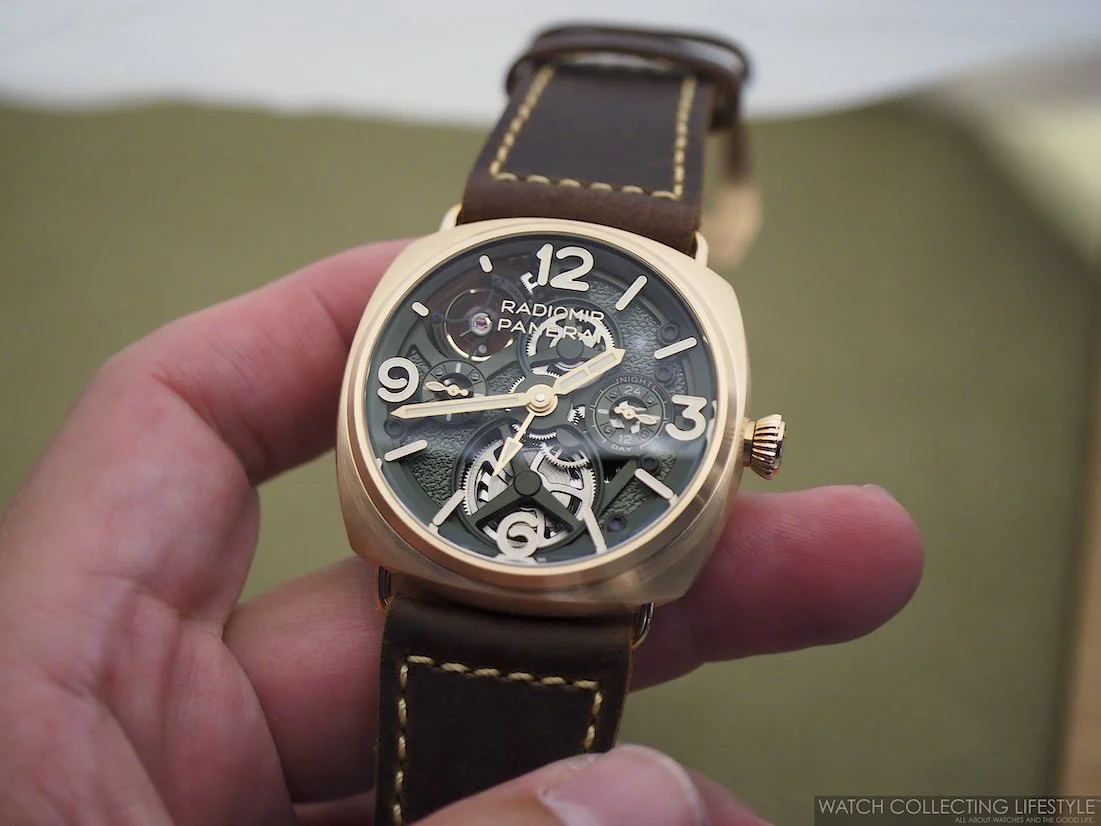
Panerai chose the Radiomir case for its haute horlogerie experiments. The Radiomir Skeleton (PAM521) cuts away large sections of the dial to expose the movement beneath — bridges, gears, and mainspring visible through a sapphire crystal. The Tourbillon GMT variants (PAM559, PAM1284) add a rotating escapement visible at 9 o’clock.
Skeleton Radiomir replicas are rare and demanding to produce. The exposed movement must look convincing from the front — any sloppy finishing, misaligned bridges, or incorrect decoration immediately shows. Only consider skeleton replicas from top-tier sources.
Firenze — The Florence Connection
Panerai was founded in Florence in 1860 as a watchmaking school and shop on the Ponte alle Grazie. The Radiomir Firenze editions (PAM604, PAM672) pay tribute to that origin with special dials, casebacks engraved with the Ponte Vecchio, and limited production runs. The “Firenze 1860” inscription appears on select models as a reminder that this brand existed for 76 years before it ever made the Radiomir.
Best Radiomir Replica Models — Summary Table
| PAM | Variant | Size | Dial | Movement |
|---|---|---|---|---|
| PAM183 | Black Seal | 45mm | Matte black | Hand-wound |
| PAM292 | Black Seal Logo | 45mm | Black with OP logo | Hand-wound |
| PAM424 | California Dial | 47mm | California (Roman + Arabic) | Hand-wound P.3000 |
| PAM504 | Radiomir 8 Days | 45mm | Black, PR indicator | Hand-wound P.2002 |
| PAM521 | Skeleton | 47mm | Open-worked | Hand-wound P.2005 |
| PAM604 | California Firenze | 47mm | California + Firenze caseback | Hand-wound P.3000 |
For leather strap pairings with your Radiomir, check our complete Panerai strap guide. And for understanding the hand-wound movements inside, see the Swiss movement breakdown.
Hand-Wound vs Automatic — Why Radiomir Stays Manual
Nearly every Radiomir uses a hand-wound movement. This is not a limitation — it is a deliberate design choice that goes back to the original 1936 watch. Automatic winding requires a rotor, and a rotor needs case thickness. The Radiomir’s cushion profile works best when the movement is slim, and hand-wound calibers are inherently thinner than their automatic counterparts.
There is a tactile pleasure to winding a Radiomir every morning. Thirty turns of the crown — smooth, with just enough resistance to feel the mainspring tightening — and you have 72 hours of power from a P.3000 clone, or 48-52 hours from an Asian Unitas-type movement. It becomes a ritual. Coffee, wind the watch, check the power reserve. Some collectors consider hand winding part of the ownership experience, the way driving a manual transmission car is more engaging than an automatic.
The exceptions are the Radiomir 1940 models that house a P.4000 micro-rotor movement — automatic winding from a small rotor that sits within the movement plane instead of on top. This keeps the case thin while adding automatic convenience. But these models are rare in the replica market because the micro-rotor is harder to clone convincingly.
Radiomir Sizing — 42mm, 45mm, 47mm
Radiomir models come in three main sizes, and each wears very differently because the cushion case measures corner-to-corner, not flat edge-to-edge. A 45mm Radiomir has the same visual footprint as a 42mm Luminor because the rounded corners eat into the dial area.
| Size | Best For | Wrist Range | Models |
|---|---|---|---|
| 42mm | Dress, daily wear, smaller wrists | 6.0-7.0 inches | Radiomir 1940 42mm |
| 45mm | Classic Radiomir size, versatile | 6.5-7.5 inches | PAM183, PAM292, PAM504 |
| 47mm | Statement, collector pieces | 7.0+ inches | PAM424, PAM521, PAM604 |
The 45mm Black Seal hits the sweet spot for most wrists. It wears smaller than numbers suggest because the wire-loop lugs do not extend past the case edge the way Luminor lugs do. The 47mm California dial models are for people who want presence — they dominate the wrist but never look as large as a 47mm Submersible because the cushion shape softens the visual mass.
For a detailed wrist-to-size comparison across all Panerai collections, check our complete size guide.
Frequently Asked Questions
Why does the Panerai Radiomir not have a crown guard?
The Radiomir was designed in 1936, nearly two decades before Panerai invented the crown guard for the Luminor line. The Radiomir uses a simple screw-down crown that seals against a gasket — effective enough for diving, just not as dramatic looking.
What is a California dial on a Panerai?
A dial layout that uses Roman numerals on the top half and Arabic numerals on the bottom half. Named after California-based dial restorers who may have originated the style. It combines two high-contrast numeral formats for maximum readability.
What is the difference between Radiomir and Radiomir 1940?
The 1940 replaces the wire-loop lugs with solid machined lugs — a transitional design between the Radiomir and the Luminor. The cushion case shape and exposed crown remain identical. The 1940 wears more modern and is available in a wrist-friendly 42mm size.
Which Panerai Radiomir replica is best for beginners?
The PAM292 Black Seal Logo in 45mm is the classic entry point — clean matte black dial, small seconds, hand-wound simplicity. If 45mm feels too large, the Radiomir 1940 42mm models offer the same heritage in a more manageable size.
Can you get a Radiomir replica with a skeleton dial?
Yes, but they are rare and quality varies significantly. The exposed movement must have convincing finishing — any rough edges or misaligned bridges are immediately visible. Only source skeleton Radiomir replicas from established top-tier factories.