

Panerai News
Panerai Materials – Carbotech, Bronzo, Ceramica and Titanium Explained
Mar
Panerai Materials – Carbotech, Bronzo, Ceramica & Titanium Explained
Panerai works with more case materials than almost any other watch brand. Steel, ceramic, titanium, carbon fiber, bronze, gold — each changes how the watch looks, feels, ages, and wears on your wrist. This guide explains every material Panerai uses, how replica versions compare to genuine, and which panerai carbotech replica or Bronzo model deserves your attention.
In This Guide:
Carbotech – Forged Carbon Fiber
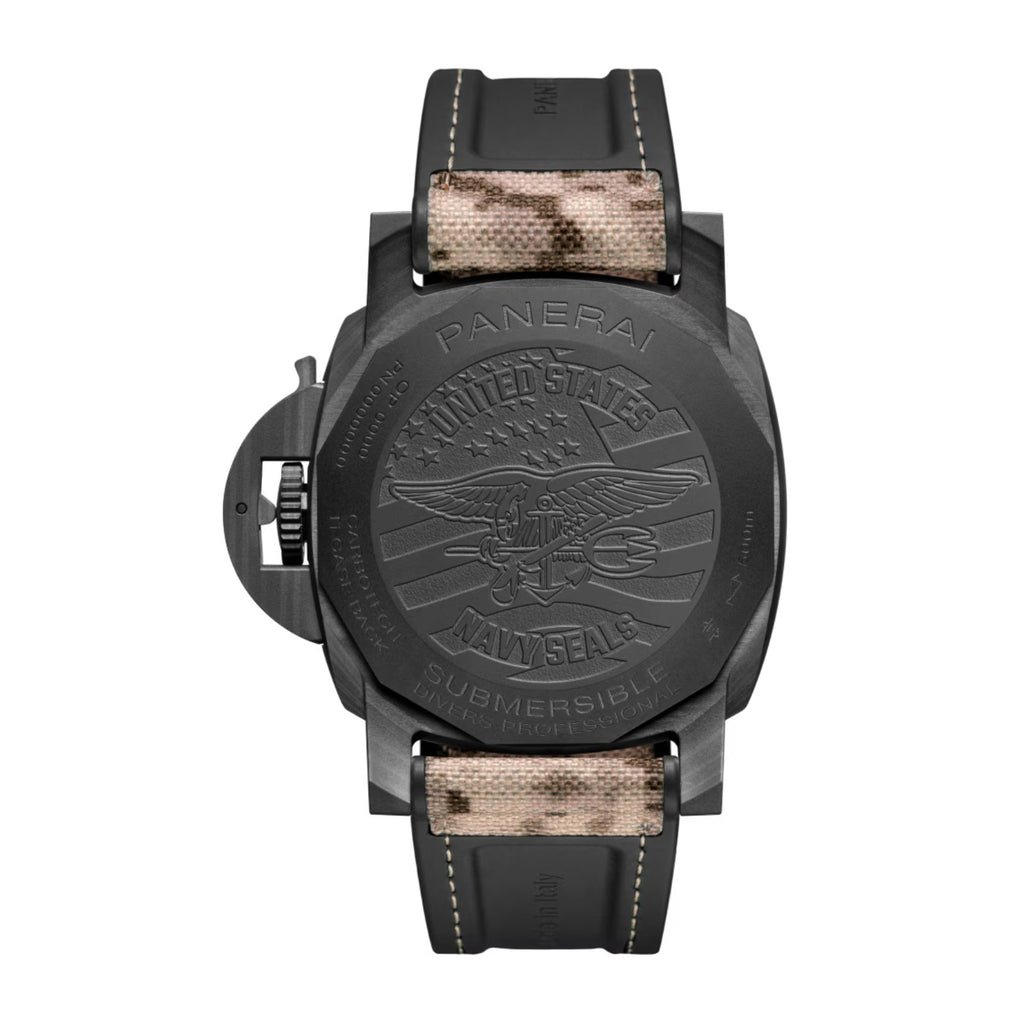
Carbotech is Panerai’s proprietary forged carbon fiber composite. Unlike traditional carbon fiber with its woven pattern, Carbotech uses randomly oriented carbon sheets compressed at high temperature and pressure. The result: a matte black surface with unique, wood-grain-like patterns that differ on every single watch — even two identical references will look different.
The panerai carbotech replica from top factories uses a similar forged carbon composite process. The random fiber orientation is genuine — not printed or stamped. This means each replica Carbotech case has its own unique pattern, just like the genuine. Weight sits around 120g for a 47mm case — dramatically lighter than the 170g+ steel equivalent.
Bronzo – Living Bronze
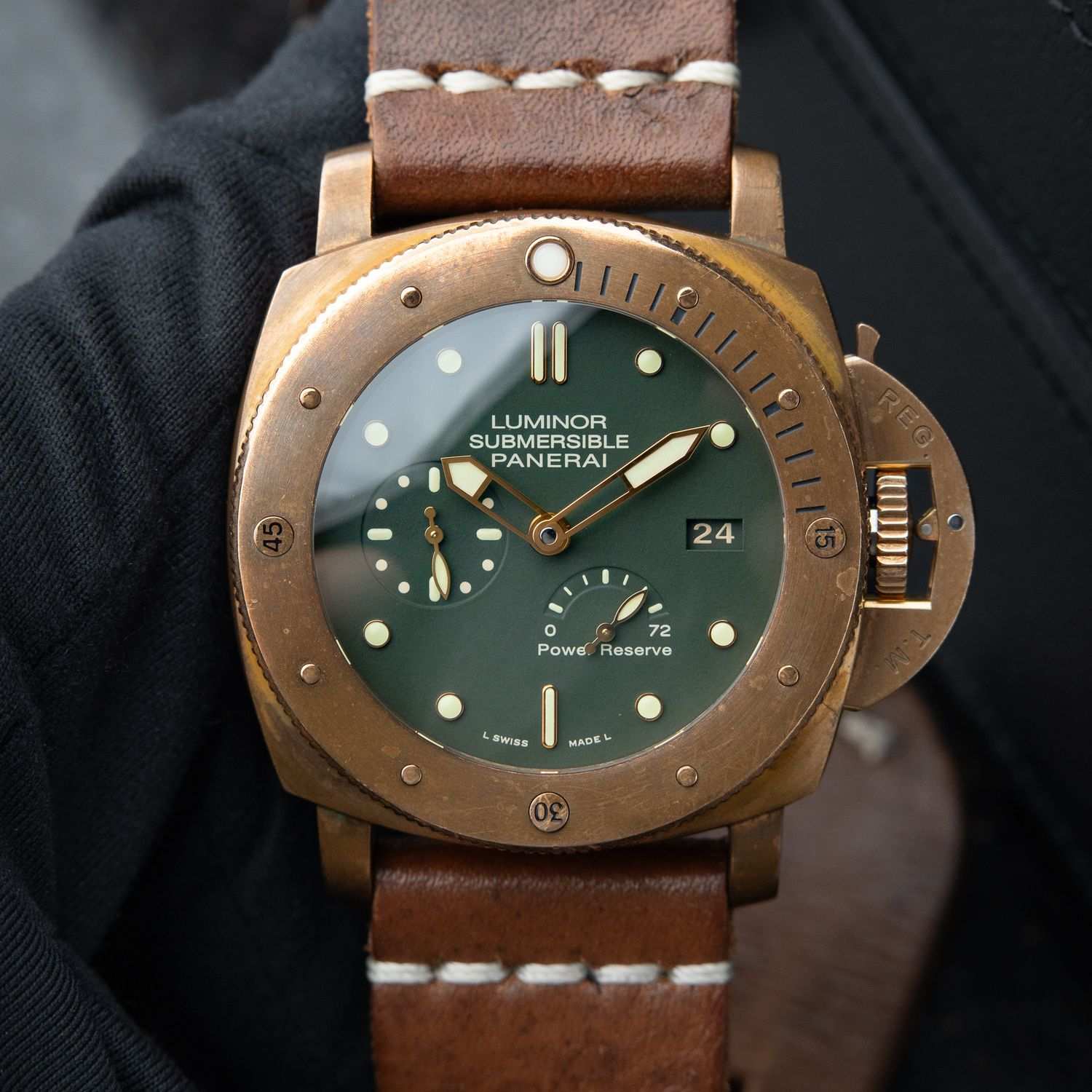
CuSn8 bronze alloy is a “living” material — it reacts with air, moisture, and your skin chemistry to develop a patina that changes week by week. A new Bronzo starts bright golden. Within days, it begins to darken. After months of wear, you’ll see brown, green, and even blue tones depending on your body chemistry and climate.
Superclone Bronzo models use the same CuSn8 alloy as genuine Panerai. The patina process is chemically identical — not faked or accelerated. Your replica will develop its own unique color profile based on how you wear it. Two people wearing the same PAM968 in different climates will have completely different-looking watches after a month.
Ceramica – Scratch-Proof Black
Panerai Ceramica uses zirconium oxide ceramic — the same base material as dental implants and industrial cutting tools. The case is fired at temperatures above 1500 degrees Celsius, creating a surface harder than steel that resists scratching under normal wear conditions. The matte black finish absorbs light, making the crown guard nearly invisible against the case body.
Replica Ceramica also uses zirconium oxide ceramic. The firing process determines final hardness — genuine Panerai controls temperature to tighter tolerances, but the end result for daily wear is visually and functionally identical. The PAM441 Ceramica GMT is the signature model — a black monolith with GMT complication.
Weight: ~140g (44mm)
Scratch: Near-immune
Patina: None
Feel: Cool, light
Models: PAM441
Titanium – Featherweight Strength
Grade 5 titanium (Ti-6Al-4V) weighs 40% less than 316L stainless steel while matching its structural strength. The matte grey finish has a distinct character — more industrial, less flashy than polished steel. On wrist, the difference is immediately obvious: a 47mm titanium Submersible feels like a 42mm steel watch in terms of weight.
Titanium replicas are among the hardest to produce accurately. The material requires specialized machining tools and different finishing techniques than steel. Fewer factories work with titanium, which means fewer options but generally higher quality when available. The PAM984 is the flagship titanium Submersible — 47mm presence at dramatically reduced weight.
Weight: ~100g (47mm)
Scratch: Moderate
Patina: None
Feel: Very light, matte
Models: PAM984
316L Steel – The Standard
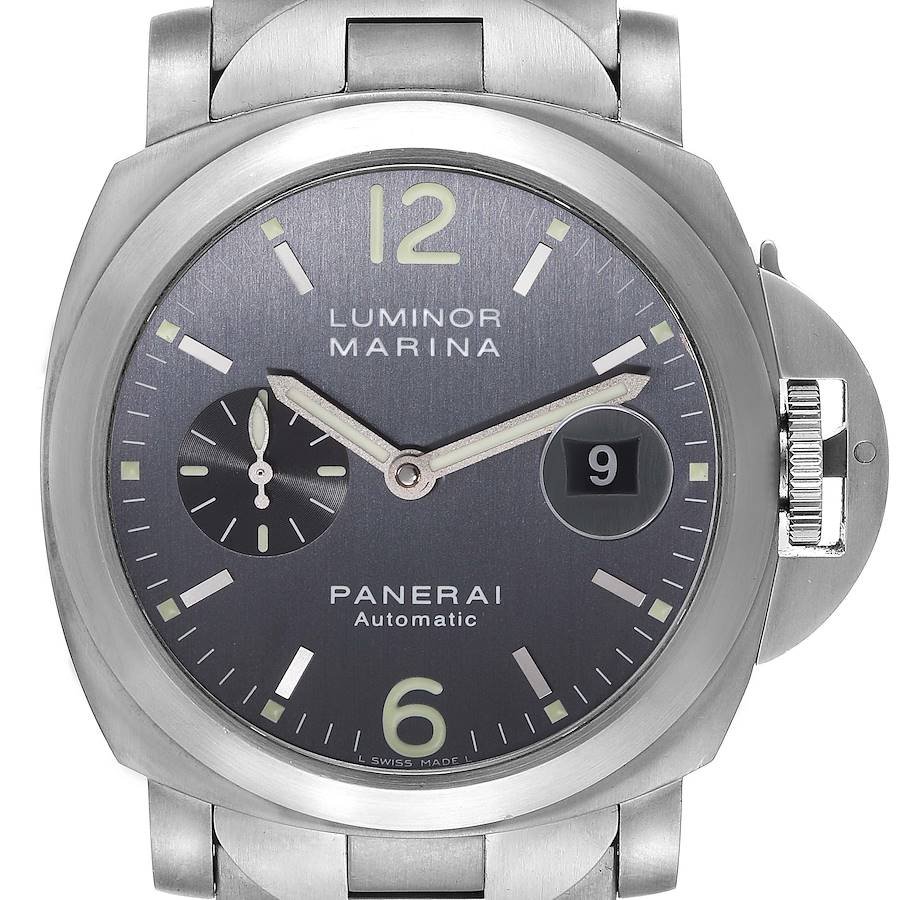
Genuine Panerai uses AISI 316L surgical-grade stainless steel — the same grade in quality superclones. Unlike Rolex (904L), Panerai chose 316L for its proven corrosion resistance and machinability. This means the steel in your superclone is genuinely identical in composition to authentic Panerai. Same weight, same finish potential, same hypoallergenic properties.
Material Comparison at a Glance
Frequently Asked Questions
Is Panerai Carbotech replica the same material as original?
Top-tier replicas use a genuine forged carbon fiber composite — the same production principle as Panerai’s Carbotech. Random fiber orientation creates unique patterns on each case. The main difference is in quality control: Panerai inspects every case to strict tolerances, while replica factories have wider variation in fiber density and surface finish.
Does a Bronzo replica develop patina like the real one?
Yes — because both use the same CuSn8 bronze alloy. Patina is a chemical reaction between copper in the alloy and environmental factors (air, moisture, skin oils). The alloy composition determines patina behavior, and since the alloy is identical, the patina process is genuine. Your Bronzo replica will develop its own unique color profile naturally.
Which Panerai material is most scratch-resistant?
Ceramica (zirconium oxide ceramic) is virtually scratch-proof under normal conditions. Only diamond or sapphire can scratch it. Carbotech is second — the carbon fiber composite resists scratches well though deep impacts can chip the surface. Steel and titanium scratch most easily but can be polished to remove marks. Bronze scratches are hidden by patina development.
What is the lightest Panerai replica?
The PAM984 Titanium at approximately 100g for a 47mm case. The PAM616 Carbotech follows at around 120g. Both are dramatically lighter than the 170g+ steel equivalent at the same size. For those who want Panerai’s bold dimensions without the weight, these two materials are the answer.
Is Panerai Ceramica replica real ceramic?
Yes. Quality superclone Ceramica models use actual zirconium oxide ceramic — the same base material as genuine Panerai. The ceramic is fired at high temperatures to achieve hardness and the characteristic matte black finish. The difference lies in temperature control precision during firing, but the resulting material on your wrist is functionally identical.